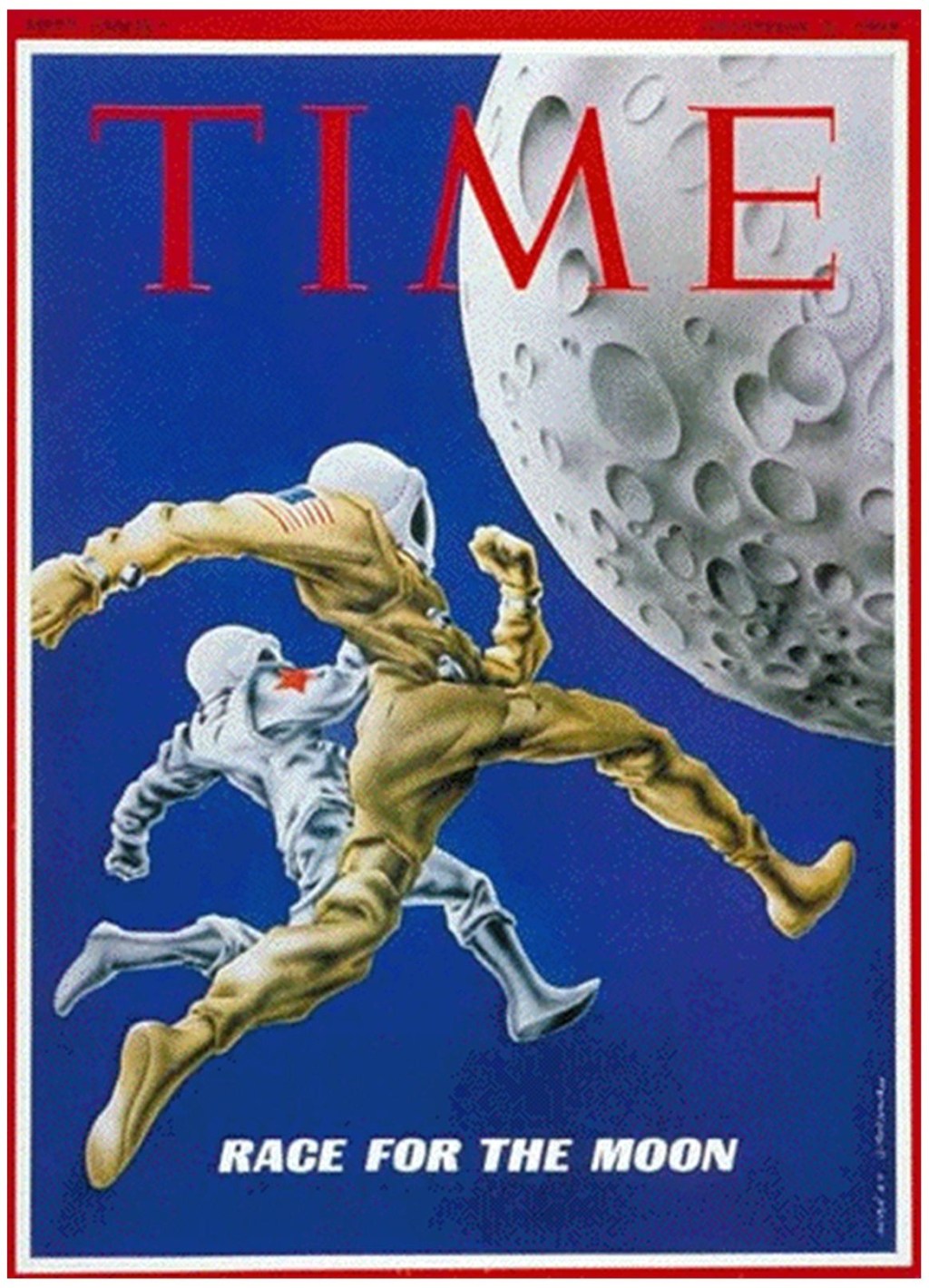
Oregon can lead the nation by issuing a climate challenge in the spirit of John F Kennedy.
Angus D______, Oregon Global Warming Commission
In 1961, President Kennedy issued a challenge to America. In response to the Soviet advances in space technology, he crafted an inspiring mission for America – to push the boundaries of the possible, to boldly go where no man had gone before – to put a man on the moon.
Of course, this was more than just a schoolyard challenge, an attempt to be the best for its own sake. The Space Race took place during a time of global uncertainty and fear, with the specter of global thermonuclear annihilation a very real concern. The winner of the Space Race would have demonstrated to the other side technological, economic, and organizational superiority; superiority which could, it was implied, be directed to more martial ends. However, superiority is an abstract, subjective term. Putting a man on the moon, however, was a concrete goal – instantly understandable to the average American, and completely objective. We either got a man on the moon before the Soviets, or we didn’t; understanding the scientific, organizational, and political minutiae of the project was not necessary.
The Soviet Union is no more, and while nuclear war seems to be making a surprise comeback as a clear and present global threat, it now vies with the threat presented by climate change. Like nuclear war, it is global in scope, assures mutual destruction to all in the long run, and ultimately requires the cooperation of the international community to solve. Also, like our Cold War struggle with the Soviets, it is an issue that demands boldness, imagination, and leadership embodied in the Space Race.
What we need is a Carbon Race.
Oregon leads other states in the race to carbon neutrality – objective, understandable goal. Places implicit (explicit) pressure on neighboring states to step up their game, too. Talk about why Kennedy justified the Space Race not as a scientific or military exercise, but as representative of the struggle between competing ideologies – tapped into people’s instinctive sense of identity and pride, rather than getting bogged down in technical details.
“If we are to win the battle that is now going on around the world between freedom and tyranny, the dramatic achievements in space which occurred in recent weeks should have made clear to us all, as did Sputnik in 1957, the impact of this adventure on the minds of men everywhere, who are attempting to make a determination from which road they should take.
“I believe that this nation should commit itself to achieving the goal, before this decade is out, of landing a man on the moon and returning him safely to the Earth. No single space project in this period will be more impressive to mankind, or more important for the long-range exploration of space; and none will be so difficult or expensive to accomplish.”
Can it be done? Bhutan has achieved it (why? how?), so we know it’s possible, and not just in the distant future, but as an immediate prospect. We have more money/tech/etc, can we not at least match the achievements of little ol’ Bhutan?
Even if we are overtaken by fellow states (CA? New England?), let us at least be the first to issue this challenge. We dropped the ball on the Paris Agreements (CA, etc, got there first), let’s take back the initiative on climate and start the carbon race.
“… We choose to go to the Moon in this decade and do the other things, not because they are easy, but because they are hard;…”
 Stuart Duncan
Leave a comment